Have you ever walked into a room months after a renovation was "finished," only to see a thin layer of grey film on your coffee table or office desk? You wipe it away, thinking it’s just a one-time thing, but then it’s back the next morning. It feels like you’re living in a ghost story where the ghost is a never-ending supply of fine white powder.
If dust continues to return after renovation, there may be remaining deposits, ongoing work, or another source that needs investigation. Understanding the connection between construction dust and indoor air starts with the materials involved and the areas where dust remains.
At Dust Busters, we plan post-construction cleanup around the remaining dust, affected surfaces, and project conditions. The aim is to identify what needs cleaning and which areas require the attention of another qualified contractor.
Construction Dust Varies by Material and Particle Size
Construction work can produce dust of different sizes and compositions. Some particles are fine enough to become airborne and may be redistributed when surfaces are disturbed. The materials used and the work performed affect the hazards; a white film alone does not establish whether dust contains respirable crystalline silica.
For example, cutting concrete, brick, or stone can produce silica-containing dust. Cleanup methods should be selected for the actual materials and exposure risks, rather than treating all renovation dust as the same substance.

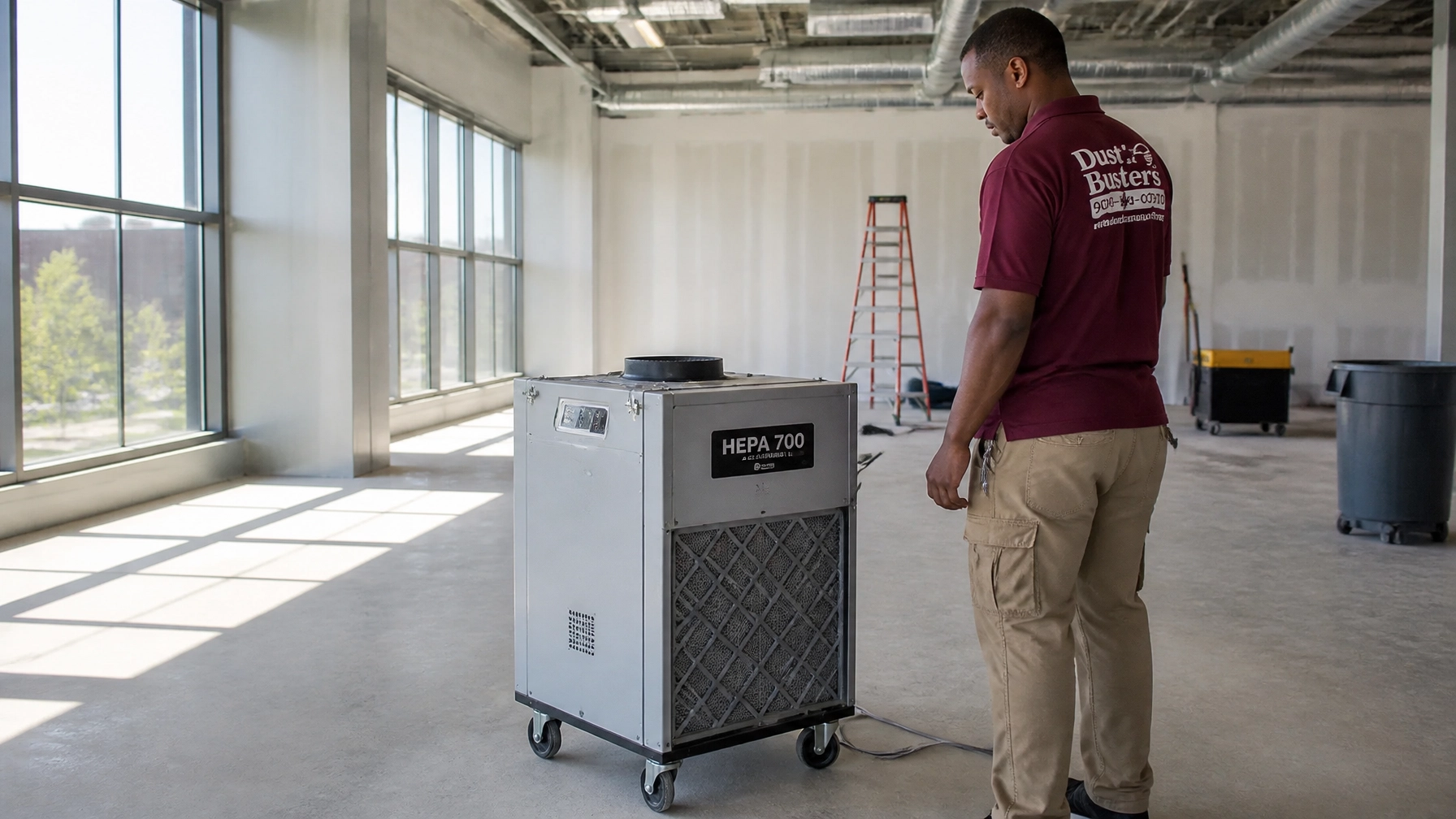
Suitable HEPA-filtered equipment can help collect fine dust as part of a planned cleanup.
The Hidden Reservoirs: Where the Dust Hides
Remaining dust on upper surfaces, in crevices, or on unfinished materials may be disturbed after an initial cleanup. A post-construction cleaning plan should account for accessible deposits and the limits of the agreed scope. Our guide to why dust keeps returning after cleaning explains common sources to investigate.
Common hiding spots include:
- HVAC Returns, Filters, and Nearby Surfaces: Inspect accessible areas for buildup and ask the HVAC contractor whether the system needs attention. Do not assume the ducts are the source solely because dust is visible on a vent cover.
- Wall Cavities and Ceiling Voids: Fine dust can settle behind baseboards or inside drop ceilings during the "rough" phase of construction.
- Porous Surfaces: Unfinished concrete and textured materials can retain residue. Assess the surface condition and use a compatible method to collect remaining dust.
- Soft Goods: Carpets and upholstery may retain construction residue. Choose equipment and cleaning methods appropriate for the material and the type of dust.
Choose Dust-Collection Methods for the Job
Post-construction work can require a different scope from routine janitorial maintenance. Confirm the materials, access, equipment, and remaining trade work before selecting a cleanup method.
Equipment that is not designed for fine construction dust may release particles through its exhaust or be damaged by the material. Use suitable dust-collection equipment, filtration, and work practices for the job.
Ask the cleaning team how it will collect dust, protect completed finishes, and check the result. Agree on any exclusions or specialist work before the visit.

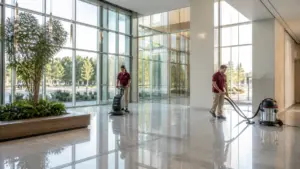
Mechanical scrubbing and recovery may help collect residue from compatible concrete floors as part of a surface-specific cleanup.
Assess the Materials and Exposure Risks
Construction dust may contain hazardous materials, depending on the work and products involved. OSHA identifies respirable crystalline silica from activities such as cutting concrete, brick, and stone as an occupational health hazard. Cleaning should be planned around the actual materials and exposure risks rather than the appearance of the dust.
If hazardous contamination is suspected, arrange an appropriate assessment before disturbing it. Ordinary cleaning is not a substitute for specialist remediation or required testing.
How a Detailed Cleanup Addresses Remaining Dust
A surface-specific cleanup may include the following steps, depending on the materials, access, and agreed scope:
- Air Filtration When Appropriate: Properly selected equipment can help reduce airborne particles that pass through it. Filtration supplements source control and surface cleaning; it does not verify that a building is safe for occupancy.
- HEPA Vacuuming: Use suitable HEPA-filtered equipment for accessible surfaces included in the scope, following the equipment instructions and the requirements of the material being collected.
- Surface Wiping: Where the finish and curing time permit it, collect remaining residue with compatible cleaning products and microfiber cloths. Keep cloths and rinse water clean.
- Carpet Care: Assess existing carpets and choose a method compatible with the fiber, installation, manufacturer’s care instructions, and remaining residue.

Precision matters. We target the high-up ledges and unfinished spaces where dust loves to hide.
Review the Cleanup Before Handoff
Whether the project is a home renovation or a commercial expansion, coordinate the final cleanup with the remaining trade work and the handoff date. Record any areas that need another visit or a specialist assessment.
Use our owner-turnover cleaning checklist to review accessible surfaces, flooring, glass, and follow-up items before the walkthrough.
Ready for a Fresh Start?
If dust keeps returning, discuss the remaining deposits and recent work with Dust Busters. We can plan the cleanup around the affected surfaces and your project’s handoff requirements.
For New Jersey residential and commercial projects, ask for a clear description of the included work, access requirements, and any exclusions.
Contact Dust Busters for a post-construction cleaning estimate and a cleaner space with a clearly documented cleanup scope.