You’ve spent months, maybe even years, managing blueprints, subcontractors, and delays. The project is finally nearing the finish line, but there’s one giant, dusty hurdle left: the owner walk-through. We’ve all seen it, a beautiful new build or a high-end renovation that looks "almost" ready, but a thick layer of fine white dust covers every surface, and footprints are tracked across the brand-new VCT flooring.
It isn't unheard of for a general contractor to lose a referral simply because the "final" look didn't feel finished. It isn't unheard of for an owner to focus on a single smudge on a window rather than the $500,000 worth of masonry you just completed. At Dust Busters, we know that the transition from a "job site" to a "property" is psychological. You need that "wow" factor to close out your punch list and get your final payment.
Use this post construction cleaning checklist to plan the final review before owner turnover. Confirm the scope, protect completed finishes, and record anything that needs another visit before the keys change hands.
Plan the Cleaning Stages Before the Final Walkthrough
Professional post-construction cleaning in NJ should follow the project schedule. Our guide to construction-cleaning stages explains how rough, detail, and final visits fit together. Use the checklist below to prepare for the owner walkthrough.
- The Rough Clean: This happens after the framing, electrical, and plumbing are done but before the finishes go in. We remove bulk debris, stickers, and heavy dust so your flooring and cabinet installers aren't working in a mess.
- The Final Clean (The Deep Dive): This is the most critical stage. It occurs after all trades are finished. The agreed scope may cover accessible surfaces from ceiling fixtures to baseboards, using methods appropriate for each finish.
- The Touch-Up (The "Fluff and Buff"): A few days before the turnover, after the last plumber or painter has come back for a "quick fix," we return to remove any new footprints or settle-dust.
Interior Surfaces: More Than Just a Wipe-Down
The biggest mistake we see in New Jersey construction sites is the "sweep and go" method. Fine drywall dust is insidious. It floats, settles, and then settles again. Look for a cleaning crew that includes vertical surfaces as well as floors and counters in the agreed scope.
- Walls and Ceilings: Inspect for dust and use a method compatible with the finish. Follow paint and surface manufacturers’ curing and cleaning instructions.
- Baseboards and Trim: These are dust magnets. Every ledge, crown molding, and door frame needs a damp-wipe.
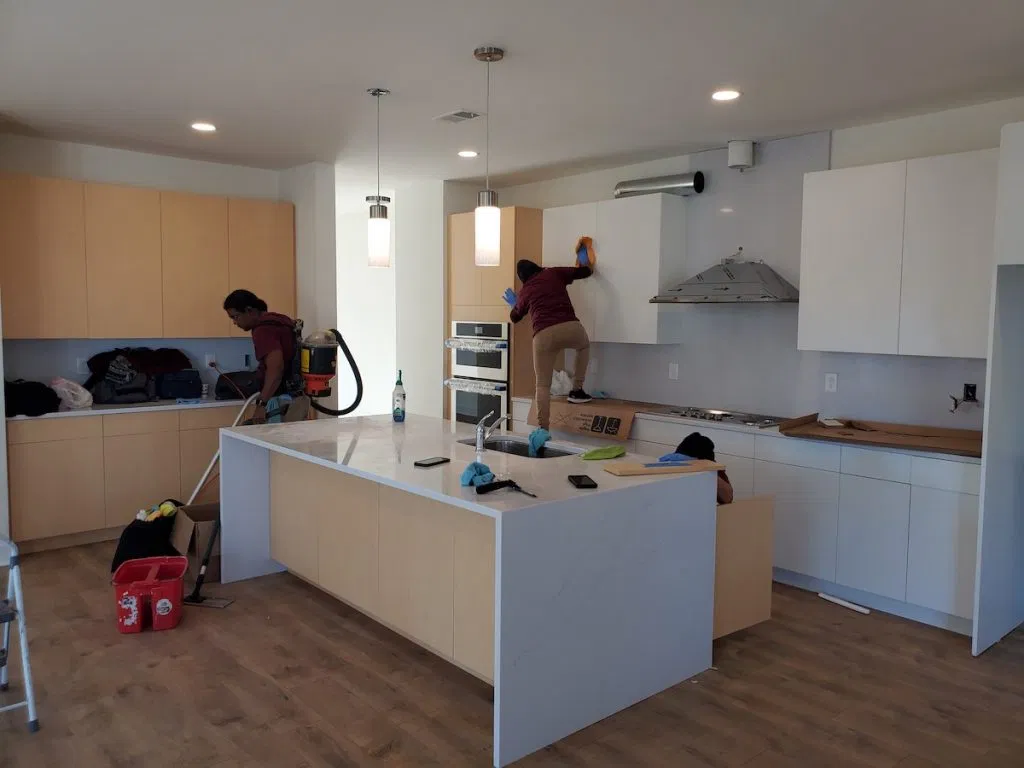
- Cabinetry (Inside and Out): We often find that "clean" cabinets are only clean on the outside. Every drawer needs to be pulled out, vacuumed with a HEPA filter, and wiped down. This includes the tops of the cabinets where dust loves to hide.
- Hardware and Switch Plates: Remove all paint overspray and fingerprints from doorknobs, hinges, and light switches.

Plan debris removal before the final owner walkthrough.
Windows and Glass: The Face of the Project
Windows are the first thing an owner looks through. If there are stickers, silicone smears, or plaster drips on the glass, the whole project feels "unfinished."
- Labels and Residue: Confirm which labels and protective films may be removed. Use methods approved by the glass or fixture manufacturer; do not scrape coated glass without confirming compatibility.
- Track Vacuuming: This is the most skipped step. Construction grit in the tracks can grind down the window mechanism. We vacuum the tracks before washing the glass.
- Frames and Sills: Wipe down the mullions and sills to ensure no dust remains to blow back onto the clean glass.

Coordinate window cleaning with the accessible areas and approved project scope.
Floors: Restoration, Not Just Mopping
Whether you’ve installed hardwood, VCT, or luxury carpet, the floor is where the most damage occurs during a build. A simple mop isn't enough to remove grout haze or concrete dust.
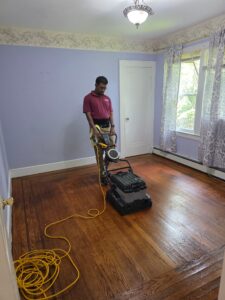
- Hard Floors: Identify the flooring and finish before selecting pads, cleaning products, or any restoration treatment. Remove loose grit first and address grout haze or adhesive residue using manufacturer-approved methods. Stripping and waxing should be scoped only for compatible flooring.
- Carpet: Use a cleaning method appropriate for the carpet, installation, and remaining residue. Check the carpet manufacturer’s care and warranty instructions before scheduling extraction.
- Transitions and Edges: Dust loves to hide under the lip of transitions and along the shoe molding.

Choose equipment and cleaning products that are compatible with the finished floor.
Check Remaining Dust and Coordinate HVAC Work
Construction dust varies with the materials and work involved. OSHA identifies respirable crystalline silica from certain construction activities as an occupational health hazard. Plan cleanup around the actual materials and exposure risks. Suspected hazardous contamination may require specialist assessment rather than ordinary cleaning.
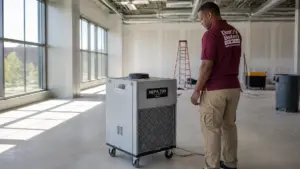
You should look for a cleaning partner that uses HEPA (High-Efficiency Particulate Air) vacuums. Standard shop-vacs often just blow the fine dust out the back of the machine and back into the air.
- Vents and Grilles: Inspect accessible covers and clean them as appropriate. Coordinate any disassembly, duct cleaning, or HVAC-system work with the responsible qualified contractor.
- HVAC Filters: Ask the HVAC contractor to inspect the filters and replace them when appropriate for the equipment and project conditions.
- High Ledges: Check accessible ledges, cabinet tops, and other approved surfaces. Leave fire-protection equipment and other specialist systems to the responsible contractor.

Suitable dust-collection equipment is one part of a planned post-construction cleanup.
The Final Punch List: The Small Details That Matter
Before you call the owner for the walk-through, walk the site one last time with this "micro" checklist:
- Light Bulbs: Are they all working? (Cleaning them often reveals if they’ve been burnt out).
- Thresholds: Are they polished and free of adhesive?
- Closet Rods: Have they been wiped?
- Appliances: Have all the blue protective films been removed from the stainless steel? Are the manuals placed neatly on the counter?
- Sanitization: In today’s world, a final wipe-down of high-touch surfaces like handrails and thermostats provides that extra layer of care.
Document the Final Review and Follow-Up
A documented final walkthrough helps identify remaining dust, finish defects, or areas that need the contractor’s attention before handoff. Agree on the cleaning scope and any exclusions, photograph issues, and record who is responsible for follow-up.
For post-construction cleaning in New Jersey, discuss the finished surfaces, remaining work, access, and turnover date with Dust Busters. A clear scope helps the project team coordinate the final cleanup.
Ready for Your Next Handoff?
Don't let months of hard work be overshadowed by a layer of dust. Whether you are finishing a retail build-out in North Plainfield or a residential renovation in Union County, we can plan the cleanup around your turnover date.
Claim your peace of mind today. Contact Dust Busters for a walkthrough and a quote on your upcoming project. Let us handle the dust while you handle the build.