Post-Construction Cleaning for Apartment Buildings: Planning Phased Unit Turnovers
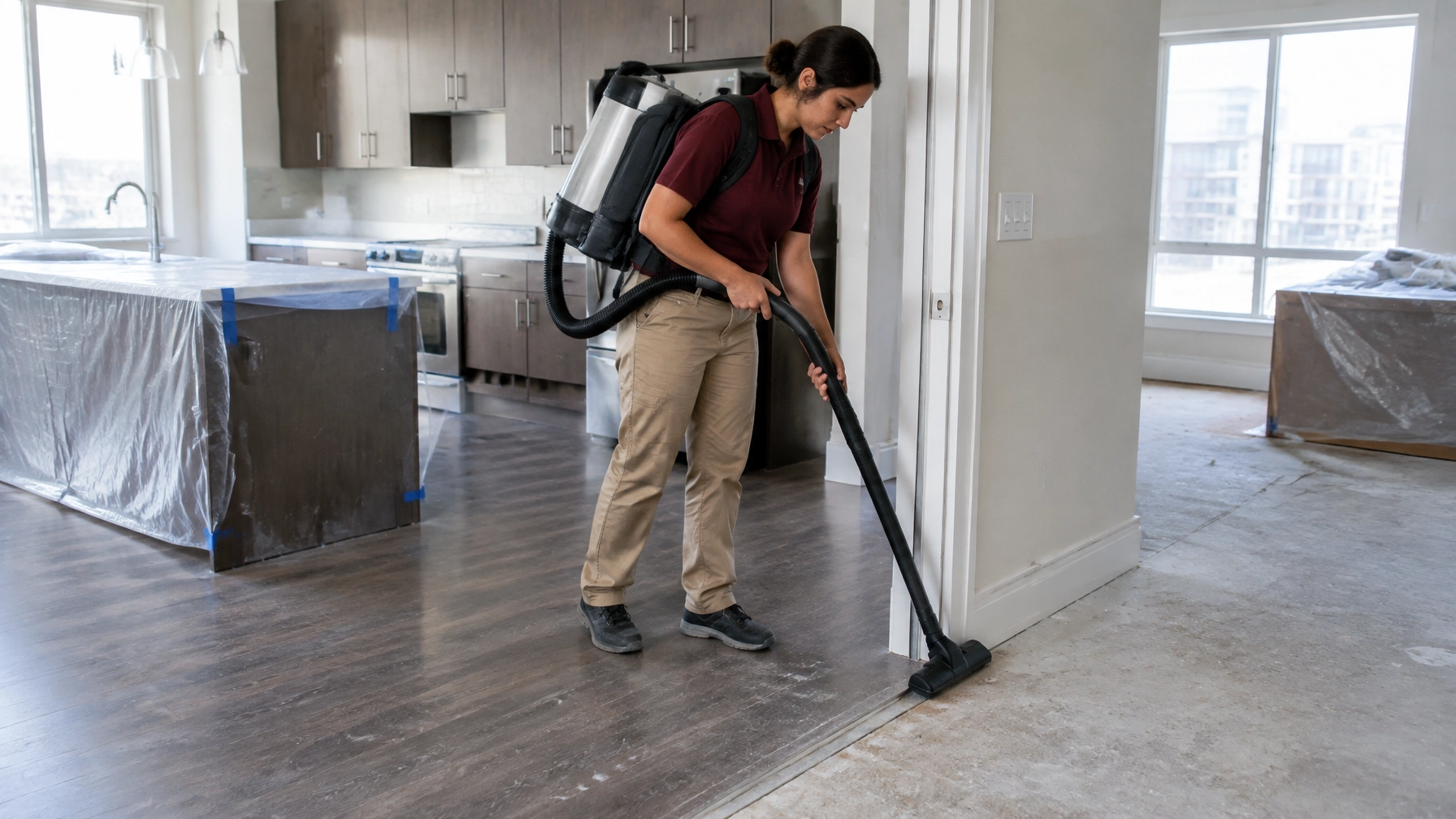
Illustrative image of cleaning inside a newly built apartment; it is not a photograph of a confirmed Dust Busters project.
Apartment post-construction cleaning can become a scheduling problem as quickly as a cleaning problem. One unit may be ready for detail work while the next still has punch-list repairs, and the corridor between them may be carrying tools, materials, and foot traffic all day. For builders, developers, and project managers in New Jersey, a phased plan helps crews work in the right places, coordinate with trades, and keep completed units from being repeatedly soiled.
The key is to manage cleaning as a series of controlled area releases, not one large task saved for the end. Choose a unit sequence, define what “ready” means, and decide how access and inspections will work before the first cleaning crew arrives.
Set up zones that match the construction schedule
A useful phase is one the superintendent can release and the cleaning lead can complete without constant interruptions. Depending on the building, that might mean a floor, a wing, a stack of similar units, or a defined group of apartments.
Avoid dividing the project only by unit count. Units on different floors may have different completion dates, access routes, or trade activity. Instead, use boundaries that make sense for the live construction schedule and site logistics.
For each zone, record:
- Unit numbers and shared areas included
- Expected trade-completion and punch-list dates
- Cleaning access dates and any restrictions
- Who authorizes release to cleaning
- Inspection and correction dates
- Whether follow-up cleaning may be needed after later work
A shared tracker can be a simple spreadsheet or project-management board. Use consistent status labels, such as trade work active, punch work pending, released for cleaning, cleaning in progress, ready for walkthrough, and released after inspection. The point is not the software. It is making sure the superintendent, trades, cleaning lead, and owner’s representative are looking at the same status.
For service details and scope discussions, see Dust Busters’ post-construction cleaning service.
Coordinate unit cleaning with punch-list work
In multi-unit buildings, trades rarely finish every apartment at the same time. An electrician may be returning to one unit while a painter is touching up another. A cleaning crew scheduled without that information can end up cleaning around active work, or revisiting areas after new dust and marks are created.
Set a short, regular coordination check with the superintendent and cleaning lead. Review which units are likely to be released, which trades still need access, and whether the promised dates have changed. A release should mean more than “the unit looks mostly done.” Confirm that the work likely to create dust, residue, or traffic in that unit is complete or clearly identified.
A practical handoff can include:
- The superintendent confirms which units are released and lists any remaining work.
- The cleaning lead reviews the areas, access arrangements, surface types, and agreed scope.
- The GC or trade team completes outstanding repairs that would interfere with the clean.
- Cleaning proceeds in the released zone.
- A quality check and project walkthrough identify cleaning items separately from construction corrections.
- Any later trade entry is recorded so the team can decide whether a localized touch-up is needed.
This keeps responsibility clearer. A paint defect, loose fixture, or damaged finish is not a cleaning correction; dust or residue created by the repair may call for additional cleaning. Agreeing on that distinction early can prevent confusion at turnover.
If your team needs a refresher on how cleaning stages fit into a project, see the related guide to post-construction cleaning stages. This article focuses on coordinating multiple areas, rather than repeating the cleaning-stage details.

Illustrative corridor scene showing controlled access during a phased apartment turnover; this is not a confirmed New Jersey project.
Choose a turnover sequence your team can protect
There is no single sequence that suits every building. Cleaning by floor can simplify access and keep crews working in one area. A wing-by-wing plan may work better when each side of a building has a separate route. Stacking units vertically may be useful when trades and materials are already moving through the same riser or elevator path.
Whichever approach you choose, make sure the sequence accounts for:
- Elevator and loading access: Establish how cleaners, trades, and deliveries will share elevators and staging areas.
- Travel paths: Identify routes that avoid unnecessary traffic through units already cleaned.
- Unit security: Decide who controls keys or access devices and how completed units will be secured.
- Inspection timing: Leave enough time for walkthroughs and corrections before a unit is treated as ready for handover.
- Work happening nearby: Consider whether construction in an adjacent unit or corridor could affect the areas being cleaned.
A zone map helps everyone understand what is open, active, or released. Mark cleaned areas clearly using the project’s agreed method, and update the map when schedules change. A sign on a door is useful only if it reflects the current status and the people on site know what it means.
Give common areas their own schedule
Lobbies, corridors, stairwells, elevators, and amenity spaces connect the units, but they also carry construction traffic. Cleaning them too early may lead to repeat work as crews move tools, materials, and debris through the building. Waiting until every apartment is finished, however, can leave no practical time for shared-space walkthroughs.
Treat common areas as related but distinct zones. For example, coordinate a corridor clean after nearby trade activity is substantially complete and before that route becomes a primary path for deliveries or inspections. Plan elevator and stairwell cleaning around the building’s actual access needs. Lobbies and agreed amenity areas may need their own release and inspection dates.
Keep emergency and required access routes clear, and coordinate temporary access changes with the project team. The cleaning plan should fit the site’s safety and logistics procedures rather than create a competing traffic pattern.

Illustrative common-area cleaning scene. The image does not represent a confirmed Dust Busters crew or project.
Inspect every unit against an agreed standard
A single building-wide walkthrough at the end can make it harder to track which unit needs what. Instead, inspect each unit, or manageable batch of units, after cleaning and before it is treated as ready for the next handoff.
Use a consistent review process. Check the areas included in the agreed cleaning scope, note findings by unit and room, and distinguish cleaning items from repairs or finish issues that belong to the construction team. Assign each item an owner and a target date. Once corrections are complete, record whether the unit needs a touch-up and who will confirm it.
A simple record can capture:
- Unit or zone number and inspection date
- Areas reviewed and any items noted
- Whether the item belongs to cleaning, a trade, or another project party
- Who is responsible for follow-up
- Whether the unit was re-entered after cleaning
- Final release or outstanding status
The project team should define who conducts the cleaning quality check and who has authority to accept the unit for the next milestone. Dust Busters’ owner-turnover cleaning checklist can help with the cleaning review itself; use your project’s specifications and closeout procedures for broader construction acceptance.
Keep cleaned units from becoming dirty again
The hardest part of a phased plan can be protecting the work after it is complete. A cleaned unit may be walked through, reopened for a punch item, or used as a route to another area. Set clear expectations for access once a zone has been released.
Consider these practical controls:
- Keep a current list or map of units released for cleaning and units that are closed afterward.
- Route trades and deliveries through designated paths instead of finished apartments where possible.
- Ask trades to protect completed surfaces when they return to a unit.
- Record every post-cleaning entry and the reason for it.
- Include a process for deciding whether that entry requires a localized touch-up or broader re-cleaning.
- Schedule high-traffic units and shared routes later when the project sequence allows.
The “last-in” approach can be useful for units near active work, frequently used routes, or areas expected to see repeated inspections. Clean those areas closer to their handoff when practical, rather than treating every apartment as if it will remain untouched after the crew leaves. That decision should be based on actual access and trade activity, not just a blanket rule.
Build the cleaning plan around the handoff
A reliable unit turnover plan connects the construction look-ahead, unit releases, cleaning access, inspections, and follow-up. It also acknowledges a basic reality of active projects: if trades return after cleaning, the project team may need to review the affected area again.
For New Jersey apartment builders and project managers, the best starting point is a short planning conversation covering unit count, floor or building sequence, shared areas, target handoff dates, access, trade activity, and inspection expectations. Dust Busters can review those details and discuss a scope suited to the project.
Request an estimate from Dust Busters to plan post-construction cleaning around your apartment turnover schedule.
To discuss your project, call 908-764-0070.