Review the Cleaning Visit and Close the Loop
An office cleaning inspection checklist gives managers a clear way to review a completed visit. Instead of relying on a quick impression, compare the work with the agreed scope, record anything that needs attention, and confirm who will follow up.
This approach works for offices in North Plainfield, Scotch Plains, Cranford, and Summit. It also fits the reception areas, breakrooms, restrooms, and staff offices inside warehouse facilities. Keep production areas and industrial floors under their own agreed plan.
At Dust Busters, a useful walkthrough starts with clear expectations. Use the steps below to make your review consistent and your feedback easy to act on.
1. Start with the Agreed Cleaning Scope
Before inspecting, check which tasks were due on this visit. Routine cleaning, periodic floor care, appliance interiors, and high-reach work may have different schedules. Also note any room the crew could not access.
Keep these details at the top of your checklist:
- Visit details: date, service window, and areas included.
- Tasks due: the work listed for this visit, including any approved extras.
- Access notes: locked rooms, occupied desks, restricted equipment, and spaces unavailable to the crew.
- Reviewer: the person completing the walkthrough and the time of the review.
For example, a weekly vacuuming visit does not automatically include carpet extraction. Check the scope first so that you can distinguish missed work from a service that was never included.
2. Use Three Clear Inspection Results
Give each task one result. These simple labels keep the review focused:
- Pass: the task meets the agreed visual standard for this visit.
- Follow-up: an included task needs attention, or you need clarification before accepting it.
- Not in scope: the task was not part of the agreed visit. Record it separately if you want a quote or a future service.
If a room was inaccessible, record the reason and agree on the next step. Avoid marking the task as complete without checking it. Likewise, a visual inspection cannot verify that a disinfectant was used correctly; ask about the process when disinfection is part of the scope.
3. Walk the Office in a Consistent Order
Use the same route each time, such as reception, work areas, meeting rooms, breakroom, and restrooms. As a result, comparisons between visits become easier and fewer rooms get skipped.
Adapt these checks to your own service agreement:
- Reception and hallways: look for loose debris, visible marks on included surfaces, and waste left behind.
- Work areas: review accessible surfaces and floors. Confirm that documents, cables, and equipment remain where staff left them.
- Meeting rooms: check agreed table surfaces, chairs, waste bins, and floor areas before the next booking.
- Breakroom: inspect the sink, counters, and appliance surfaces included in the visit. Treat appliance interiors as a separate task when the scope requires it.
- Restrooms: review included fixtures, floors, waste bins, and agreed supply restocking.
Stay within safe, accessible areas. Report leaks, damaged flooring, electrical concerns, or other maintenance issues to the appropriate building contact rather than treating them as routine cleaning corrections.
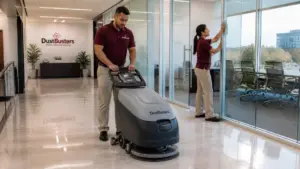
A consistent walkthrough route makes it easier to compare the same areas between visits.
4. Record the Issue with Useful Detail
“The office needs more attention” gives a crew little to work with. Instead, name the room, the surface, and what you observed. For example: “Meeting room B, table edge near the door: visible coffee residue after the evening visit.”
When useful, take an issue photo and a wider view that shows its location. Keep people, computer screens, documents, access codes, and other confidential information out of the picture. Share photos only through your company’s approved channel.
Use this short record for each follow-up:
- Location and task: where the issue is and which agreed task applies.
- Observation: a factual description, with a photo reference if appropriate.
- Result: pass, follow-up, or not in scope.
- Next action: the correction, clarification, or quote you need.
- Owner and due date: the agreed person responsible and completion time.
- Recheck: who will verify the result and record closure.
5. Agree on the Next Action
Send the cleaning contact one organized list rather than several scattered messages. Separate included work that needs correction from new requests. Then confirm access, timing, and the person responsible.
Some findings call for a different service. For example, a carpet stain may need periodic carpet cleaning rather than another vacuuming pass. Ask for an assessment and any additional quote before adding work.
For immediate hazards, follow your workplace’s reporting process. Do not wait for the next routine cleaning visit to raise a leak or a blocked route.
6. Recheck and Look for Patterns
After the agreed follow-up, inspect the same area again. Record the date and whether the issue is resolved. If it remains open, explain what is still needed and agree on the next step.
Over time, review recurring issues with your provider. Repeated findings may point to unclear expectations, limited access, insufficient time, or a task that needs a different schedule. Adjust the plan together instead of adding the same note every week.
For a separate guide to commonly missed physical spots, see five areas office managers often overlook during deep cleaning. Use that guide to review your scope; use this checklist to review the work after a visit.
Office Cleaning Inspection Checklist: Common Questions
How often should an office manager inspect the cleaning?
Choose a review schedule that fits the service frequency and your facility. A new service or a changed scope may need closer checks at first. Once expectations are clear, agree on a practical routine and review concerns promptly.
What if an item is not included in the contract?
Mark it “not in scope” and discuss whether you want to add it. Confirm the work, price, access requirements, and timing before treating it as part of the regular visit.
Does a good visual result prove disinfection?
No. Appearance alone does not confirm the product, method, or contact time used. If disinfection is included, ask the provider how the agreed process is documented and review any facility-specific requirements.
Build a Cleaning Plan You Can Review
Clear scopes, useful feedback, and a recorded recheck make office cleaning easier to manage. Dust Busters can discuss a plan for your office or the office areas within your warehouse facility.
Request an office cleaning quote or call 908-764-0070 to arrange a walkthrough in North Plainfield and nearby New Jersey communities.