Office Move-In and Move-Out Cleaning in New Jersey
An office move involves more than packing boxes. You also need to agree on the condition of the old premises and prepare the new workspace for your team. This office move-in and move-out cleaning checklist helps New Jersey businesses plan the work, identify optional services and coordinate cleaning around movers and building access.
Confirm your lease requirements directly with the landlord or property manager. Cleaning alone does not guarantee the return of a security deposit. Dust under workstations, fingerprints on glass, carpet stains and renovation residue are easy to miss when everyone is focused on boxes and deadlines.
Whether your business is relocating within North Plainfield, Cranford, Westfield, Summit, Scotch Plains or another community in our New Jersey service area, use this checklist to prepare an agreed cleaning scope.
Before You Move: Build Your Office Cleaning Plan
1. Review the lease and building requirements
Before scheduling cleaning, review your lease, building handbook, and move-out instructions. Some commercial properties require:
- Professional carpet cleaning
- Floor maintenance or refinishing
- Interior and exterior window cleaning
- Removal of adhesive, tape, and signage
- Cleaning inside cabinets and closets
- Restroom and breakroom sanitization
- Trash and recycling removal
- A final inspection after the space is empty
Ask the landlord or property manager whether “broom clean” is enough or whether the space must be professionally detailed. Do not assume that normal wear and tear covers stained carpet, damaged flooring, or built-up residue.
If you manage several offices or commercial properties, create one checklist for each location. A law office, warehouse office and retail suite will not have identical cleaning needs. Medical and other regulated premises require their own cleaning protocols. In warehouse facilities, the scope usually covers the office areas themselves: workstations, reception, breakrooms, restrooms, and any agreed staff areas, while dock and production areas follow their own separate routines.
Keep the scope practical as you build that plan. Core move-out and move-in tasks include trash removal, floors, restrooms, breakrooms, and high-touch surfaces. Services such as interior window detailing, appliance interiors, cabinet interiors, and wall spot-cleaning are valuable add-ons rather than essentials in every lease. Confirm which items your lease actually requires before requesting quotes, so you pay for what is needed and treat the rest as clearly optional.
2. Schedule cleaning after furniture removal
The best time for move-out cleaning is usually after desks, filing cabinets, shelving, and equipment have been removed. Furniture hides dust and debris along baseboards, under radiators, inside corners, and beneath cable pathways.
For the new office, schedule cleaning before furniture arrives whenever possible. An empty room allows technicians to reach:
- Floors and floor edges
- Baseboards and wall trim
- Window sills and tracks
- Accessible vent covers and reachable light fixtures
- Cabinet interiors
- Corners behind doors
- Areas beneath built-in counters
This sequence matters. Clean first, move in second. Otherwise, your new furniture can block the very areas that need attention.
3. Separate routine cleaning from construction cleanup
If the new office has been renovated, arrange a separate assessment for post-construction cleaning. Fine dust can collect on ledges, floors and accessible surfaces, so the agreed scope may include HEPA vacuuming and careful damp wiping.
Suspected hazardous dust or other contamination requires appropriate assessment and controls before routine cleaning proceeds. Final cleaning does not certify air quality or approve a building for occupancy. OSHA guidance for the cleaning industry provides an overview of workplace cleaning hazards and controls.
Office Move-In and Move-Out Cleaning Checklist
Once the old office is empty, or before the new office is furnished, work through the space from high surfaces down to the floor.
4. Remove dust from high and hard-to-reach surfaces
Start at the top so falling dust does not land on already-cleaned areas. Agree on safe access to elevated surfaces before the visit. Cleaning accessible vent covers and return grilles does not include ductwork or HVAC servicing. Check these areas where safely accessible:
- Ceiling corners and cobwebs
- Light fixtures and ceiling fans
- Air vents and return grilles
- Tops of partitions and cabinets
- Door frames and upper trim
- Window blinds and sills
- Shelving and storage racks
- Exposed pipework or utility areas
Use microfiber cloths for hard surfaces and a HEPA-filtered vacuum for fine dust. Avoid dry sweeping or blowing dust with compressed air. Those methods can send fine particles back into the air and onto clean surfaces.

Dust can collect on horizontal surfaces that need careful attention during a move.
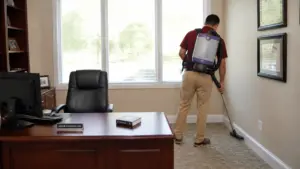
5. HEPA vacuum carpets, edges, and soft surfaces
Vacuum the entire carpeted area slowly and methodically. Pay special attention to:
- Perimeters along walls
- Corners and thresholds
- Areas under former desks
- Carpet seams
- Entryways and elevator approaches
- Spots where equipment or chairs stood
- Edges beneath baseboards and radiators
A standard quick vacuum may remove visible debris but leave embedded soil and fine dust behind. If the carpet has stains, odors, heavy traffic lanes or renovation dust, ask about an assessment and appropriate professional cleaning. Allow enough drying time before furniture and employees return.
Dust Busters uses commercial-grade extraction equipment for carpet cleaning in offices and other business facilities. Deep cleaning before employees arrive can improve the appearance of the space and help extend the life of the carpet.

Carpet cleaning can be included in an agreed office relocation scope.
6. Clean and maintain hard floors
Hard floors require the right process for the surface and its finish. Begin by removing loose debris, then use appropriate cleaning solutions and mechanical equipment.
Depending on the flooring, your checklist may include:
- HEPA vacuuming for fine dust, followed by surface-appropriate damp cleaning
- Machine scrubbing
- Spot removal
- Adhesive and tape residue removal
- Grout haze removal
- Maintenance suited to the specific VCT or LVT floor and manufacturer instructions
- Polishing or burnishing only where suitable for the floor and finish
- Floor stripping and waxing for compatible finished floors, such as appropriate VCT; do not assume LVT needs waxing
Do not use aggressive chemicals or abrasive tools without confirming that they are safe for the flooring. The wrong method can dull finish, damage resilient flooring, or leave a slippery residue.
For tile floors in restrooms, lobbies, and breakrooms, include professional tile and grout cleaning when routine mopping has left behind darkened grout, mineral buildup, or embedded soil.
Concrete floors in storage rooms, loading areas, and warehouse offices may need more than vacuuming. Ask for a surface assessment if dust keeps returning; cleaning does not repair a deteriorating concrete surface. Dust Busters’ concrete floor cleaning process uses truck-mounted washing and extraction equipment to remove deeper buildup while recovering dirty water.
Restroom, Breakroom, and High-Touch Cleaning
7. Clean restrooms from top to bottom
A restroom is one of the first areas employees and visitors notice. It is also one of the easiest areas for a landlord or facility manager to inspect critically.
Clean these surfaces, with sanitizing or disinfection where appropriate and included in the agreed scope:
- Toilets and urinals, including bases
- Stall doors and partitions
- Sinks, faucets, and countertops
- Mirrors and glass
- Soap and paper towel dispensers
- Hand dryers
- Door handles and push plates
- Floor edges, corners, and areas behind fixtures
- Grout lines and floor drains
Remove scale and buildup with products appropriate for the surface. Clean visible soil first. Where disinfection is needed, use a product suitable for the surface and follow its label, including contact time, ventilation and protective equipment. The CDC’s facility cleaning guidance is a helpful reference for cleaning and disinfecting shared environments.
8. Detail the breakroom and kitchen area
Do not overlook the room where employees prepare food and gather throughout the day. Clean:
- Countertops and backsplashes
- Sinks, faucets, and drains
- Cabinet fronts, handles, and interiors
- Refrigerator and microwave interiors if required
- Coffee machine touchpoints
- Appliance controls
- Accessible floors around appliances, with any movement agreed separately
- Trash and recycling areas
Confirm cabinet and appliance-interior cleaning separately. Do not assume appliance movement, disconnection or equipment-interior cleaning is included.
Food residue and moisture can create odors quickly, especially in an empty office that will remain closed for several days.
9. Clean high-touch zones and disinfect where needed
Create a written high-touch list for both the old and new offices. Use manufacturer-compatible methods for electronics and controls. Include:
- Main entrance handles and push bars
- Elevator buttons
- Stair railings
- Light switches
- Door handles
- Copier and printer controls
- Shared phones and conference-room equipment
- Breakroom appliance handles
- Restroom fixtures and dispensers
- Reception counters and visitor pens
Clean visibly dusty or dirty surfaces before applying disinfectant. Otherwise, soil can interfere with the product’s performance. A final high-touch pass immediately before occupancy gives your team a cleaner starting point.
The Final Move-Out Walkthrough
10. Inspect the old office with a landlord’s eyes
Before handing over keys, walk the space slowly. Look behind doors, inside closets, beneath counters, and around areas where furniture stood.
Confirm that:
- All trash and unwanted materials are removed
- Floors are vacuumed, mopped, or professionally maintained
- Carpet stains have been addressed
- Windows and glass partitions are free of fingerprints
- Cabinets and storage areas are empty and clean
- Restrooms are cleaned, with agreed sanitizing or disinfection completed
- Breakroom appliances are clean
- Adhesive, tape, and signage residue is removed
- Walls and doors are spot-cleaned where appropriate
- Pre-existing damage is documented with photographs
Cleaning will not repair damaged flooring, chipped paint, broken fixtures, or permanent stains. Document those issues separately and notify the landlord or property manager before the final inspection.
The Final Move-In Pass
11. Prepare the new office for your team
After cleaning and before employees arrive, perform a final inspection of the new workspace. Check that:
- Carpets and hard floors are dry
- No cleaning residue remains on walking surfaces
- Restrooms are cleaned and stocked as agreed
- Breakrooms are clean and odor-free
- High-touch areas have been cleaned, with disinfection where needed
- Windows and interior glass are clear
- Accessible vent covers, sills and baseboards are free of visible dust
- Any recurring renovation dust is reported for reassessment
- Hallways, entrances, and reception areas are ready for visitors
If your office relocation includes renovation, allow time for more than one dust-removal pass. Fine particles can settle again after the first cleaning, particularly around HVAC registers, ledges, and horizontal surfaces.
A professional office relocation cleaning service can coordinate the agreed work around movers, building access rules, lease deadlines and employee schedules. Plan a final walkthrough and allow time to address missed items before handing over keys.
Make Your Office Relocation Easier
Planning an office relocation in our New Jersey service area? Dust Busters can help you build a cleaning scope around the size of your office, floor types, renovation work, access arrangements and move dates.
Explore our commercial cleaning services or request an estimate for your office move. Call 908-764-0070 to discuss your project.