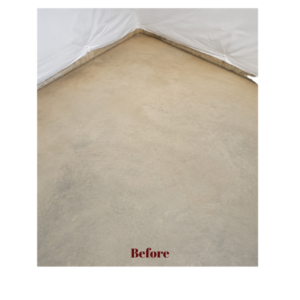
You’ve finally finished that big renovation or construction project in your warehouse, basement, or commercial space. The contractors have packed up, the new surfaces look great, and you’re ready to get back to business. Then the floor dries, and there it is again: that stubborn white haze spread across your concrete like you never cleaned it at all.
You might think, “I’ll just have the crew mop it real quick,” but two hours later, the haze is back. It’s frustrating, isn’t it? It feels like you’re chasing the same dust over and over. That’s a real complaint we hear from property managers, contractors, and business owners in North Plainfield, Green Brook, Warren, Watchung, and Scotch Plains after renovation work wraps up.
If you’re struggling to remove construction dust from concrete floors, you aren’t alone. The truth is, standard cleaning methods often make the problem worse. In the field, we see this all the time after drywall sanding, cutting concrete, and final build-out work. Without HEPA vacuuming, proper scrubbing, and full extraction, the dust settles into the slab and keeps coming back.
In this guide, we’re going to look at why that dust is so stubborn and how the pros at Dust Busters use a specialized multi-step process, real post-construction cleaning experience, and professional equipment to get your floors back to a clean, dust-free finish.
Why Construction Dust “Bonds” to Concrete
To solve the problem, you first have to understand what you’re up against. Concrete isn’t the solid, impenetrable surface it appears to be. On a microscopic level, concrete is like a giant, hard sponge: it’s incredibly porous.
During a construction project, the air is filled with ultra-fine particles of drywall, sawdust, and most importantly, silica dust from cutting or grinding concrete. These particles are much smaller than household dust. Because they are so tiny, they settle deep into the pores of your concrete slab.
It isn’t unheard of for this dust to actually “bond” to the floor. Because both the dust and the slab are mineral-based, they share a similar chemistry. When moisture in the air or a damp mop hits that dust, it can create a weak chemical bond, effectively “gluing” the dust into the texture of the concrete. This is why you can’t simply sweep it away with a broom; you’re only catching the top layer while the rest stays anchored in the pores.
Industrial Scrubbing to Remove Construction Dust From Concrete Floors
We see it all the time in warehouses, basements, and commercial spaces across Green Brook, North Plainfield, and nearby towns like Warren and Watchung. Someone tries to mop up construction dust with a bucket of water and a standard string mop. At first, it looks great: the floor is dark and looks clean while it’s wet.
But here is the scary thought: you aren’t actually removing the dust; you’re creating a “slurry.”
By adding water without a high-powered extraction system, you are turning that fine powder into a thin, liquid mud. As you move the mop across the floor, you are effectively pushing that liquid mud deeper into the concrete’s pores. Once the water evaporates, the dust re-hardens on the surface. That is the “white haze” you see an hour later. You’ve just spent three hours moving the dirt around instead of getting it out.
To truly perform effective concrete floor cleaning, you need to break that bond and physically extract the particles from the slab. That’s why this kind of work overlaps closely with real post-construction cleaning instead of routine janitorial service.
The Dust Busters 5-Step Process for Post-Construction Floors
When we handle post construction floor cleaning, we don’t just “clean” the floor: we restore it. Our process is designed to handle the unique challenges of New Jersey job sites, from medical office build-outs near Scotch Plains to warehouse and retail turnover work in North Plainfield and Green Brook, using professional-grade equipment that goes far beyond what you’ll find in a janitor’s closet.
1. HEPA Vacuuming: The Dry Removal Phase
The biggest mistake people make is introducing water too early. You should always look for a service that prioritizes dry removal first. We use industrial-strength HEPA (High-Efficiency Particulate Air) vacuums to capture 99.97% of particles as small as 0.3 microns.

Standard shop vacs often have filters that are too porous, meaning they suck up the dust and blow the finest (and most dangerous) particles right back out into the air. Our HEPA vacuums ensure that once the dust enters the machine, it stays there. On real job sites in Watchung, Warren, and North Plainfield, we meticulously vacuum the entire floor to remove the bulk of the loose debris before we ever let a drop of water touch the surface.
2. The Pre-Spray Process
Once the loose dust is gone, we address the particles that are stuck in the pores. We apply a specialized pre-spray solution across the floor. This isn’t just soapy water; we use surfactants designed to break the surface tension and “lift” the mineral dust out of the concrete.
This step is crucial because it lubricates the particles, making them easier to scrub away without scratching the concrete surface. It essentially “un-glues” the dust from the slab.
3. Industrial Scrubbing
This is where the heavy lifting happens. We use professional-grade automatic floor scrubbers equipped with specialized brushes or pads, depending on the finish of your concrete. On actual post-construction jobs, that equipment matters. It gives us the agitation and consistency needed to pull dust out of textured slabs instead of just spreading residue around.

The scrubber applies downward pressure and high-speed agitation to deep-clean the texture of the concrete. As the brushes spin, they reach into the pores and micro-cracks that a mop would simply skip over. This is the only way to ensure that concrete dust removal is actually happening at a deep level. In some facilities, we also recommend follow-up floor stripping and waxing for adjacent finished flooring that picked up construction residue during the project.
4. Extraction and Air Scrubbing
As the machine scrubs, it simultaneously vacuums up the dirty solution into a recovery tank. This is “extraction,” and it’s the secret to preventing that white haze. We aren’t leaving dirty water behind to dry; we are physically removing it from the building. That extraction step is one of the biggest differences between routine cleaning and professional commercial cleaning after construction.
Furthermore, construction dust is notorious for staying airborne for days. To protect your health and your HVAC system, we often deploy HEPA air scrubbers during the cleaning process. These machines cycle the air in the room, pulling in airborne particulates and exhausted dust so that it doesn’t just settle back onto your freshly cleaned floors overnight. That’s especially important in enclosed work areas and lower-level spaces where dust lingers. According to OSHA, fine construction dust should be removed using proper dust-control methods to reduce airborne particles.

5. Final Inspection: Eliminating the Haze
The final step is the most important for your peace of mind. We wait for the floor to dry completely and perform a “white glove” inspection. We look for any remaining shadows or haze that might indicate deep-seated dust. If we see anything less than a clean, consistent finish, we go back over that area.
Our goal is to leave you with a floor that is safe, professional, and ready for your employees or customers. Whether it’s a commercial warehouse in Green Brook, a retail space near Scotch Plains, or a contractor handoff in North Plainfield, the floor sets the tone for the entire environment.
The Benefits of Professional Cleaning
You might be tempted to handle this in-house, but it’s worth considering the risks. Construction dust, particularly silica dust, is a known health hazard. Prolonged exposure can lead to respiratory issues, and OSHA has strict standards around respirable silica exposure, which is why dust control should be taken seriously.
By hiring a professional commercial cleaning service like Dust Busters, you’re not just paying for a clean floor: you’re investing in:
- Health and Safety: We reduce fine dust and airborne particles that can affect comfort, air quality, and cleanliness.
- Property Protection: Proper scrubbing prevents abrasive dust from scratching your floors or getting into sensitive machinery.
- Time: Let your team focus on their actual jobs while we handle the heavy-duty restoration.
- Professional Appearance: A truly clean floor makes your entire facility look newer and better maintained.
If you’ve dealt with repeat dust after construction, you may also want to read our related blog, Why Construction Dust Keeps Coming Back After You Clean, for a closer look at why the haze returns when the process is incomplete.

Ready to Get Rid of the Dust for Good?
If you’ve mopped three times and the dust is still there, it’s time to stop fighting a losing battle. Don’t let construction debris ruin your new space or compromise your indoor air quality.
Dust Busters LLC specializes in high-stakes cleaning challenges across New Jersey. From tile and grout cleaning to massive warehouse floor cleaning in NJ and detailed post-construction cleaning, we have the equipment and the expertise to do it right the first time. If your project includes multiple flooring types, our floor stripping and waxing service can also help restore surrounding finished areas affected by construction dust and traffic.
If you are in North Plainfield, Green Brook, Warren, Watchung, Scotch Plains, or the surrounding areas, give us a call at 908-764-0070. Let us handle the mess so you can get back to what you do best. Your floor should look clean, safe, and professionally finished — not dusty again the next day.